
French Food and Wine Pairings: Everything You Need To Know for a Perfect Dinner
French food and wine pairings live in the pause between bites. In the way butter softens the edge of acid. In the way a chilled glass wakes up the salt on your tongue. This is not about rules shouted across a table. It is about feel. It is about trust built between what is poured and what is plated.
In Old Montreal, this craft feels at home. Stone walls. Slow evenings. Plates meant for sharing. The cooking carries French roots with Italian ease and Quebec soul. The wine follows that same instinct. Nothing stiff. Nothing forced. Each pairing lands with calm confidence.
French food and wine pairings reach their peak when they feel natural. When you stop thinking and start tasting. When one sip pulls the flavor longer across your tongue. When the next bite lands deeper. This is the kind of rhythm that turns dinner into memory.
Simple Rules for French Food and Wine Pairing
Great French food and wine pairings feel effortless. That ease comes from quiet structure. Not rigid formulas. Not showy tricks. The best pairings follow a few simple ideas that guide every decision at the table.
Below are the five rules that shape how French pairing works in real life.
Rule One. Match the Weight
Light food wants light wine. Rich food wants wine with presence. This is the first balance that keeps a pairing from feeling off.
A delicate carpaccio needs air and lift. A heavy protein wants structure in the glass. When the weight is aligned, nothing feels drowned. Nothing feels thin.
Look for these cues:
Lean fish with mineral whites
Pastas with fresh tomato and younger reds
Duck and beef with wines that carry texture
When weight matches weight, the table feels steady.
Rule Two. Pair to the Sauce
In French cooking, sauce leads. The protein simply follows.
Butter calls for brightness. Cream invites softness. Acid asks for tension. Smoke asks for depth.
At the table, this means the wine respects the liquid on the plate more than the cut of meat. A beurre sauce shapes the pairing. A citrus glaze reshapes the choice. When the sauce leads, the pairing settles into place with ease.
Rule Three. Keep the Wine More Acidic Than the Dish
Acid wakes food up. Without it, flavors fall flat.
French food often carries richness. Wine steps in with lift. When the wine holds higher acidity than the dish, each bite feels clean again. Nothing drags. Nothing clings.
This rule is why shellfish and crisp white wine feel so alive together. It is why fatty fish sings with tension in the glass.
Rule Four. Use Fat to Tame Tannin
Tannin can feel harsh when it stands alone. Fat softens that edge.
This is the quiet magic of red wine with duck. It is the reason steak feels smoother with structured wine. Fat coats. Tannin grips. Together they settle into something round.
It is not force. It is balance.
Rule Five. Let Place Guide the Pairing
French tradition trusts the soil. What grows near each other often belongs together.
This is why Loire goat cheese finds harmony with Sancerre. This is why oysters lean toward Muscadet. This is why Burgundy walks so naturally beside beef.
French food and wine pairing examples often start with geography for a reason. The land builds the relationship before the table ever does.
Classic French Pairings to Know
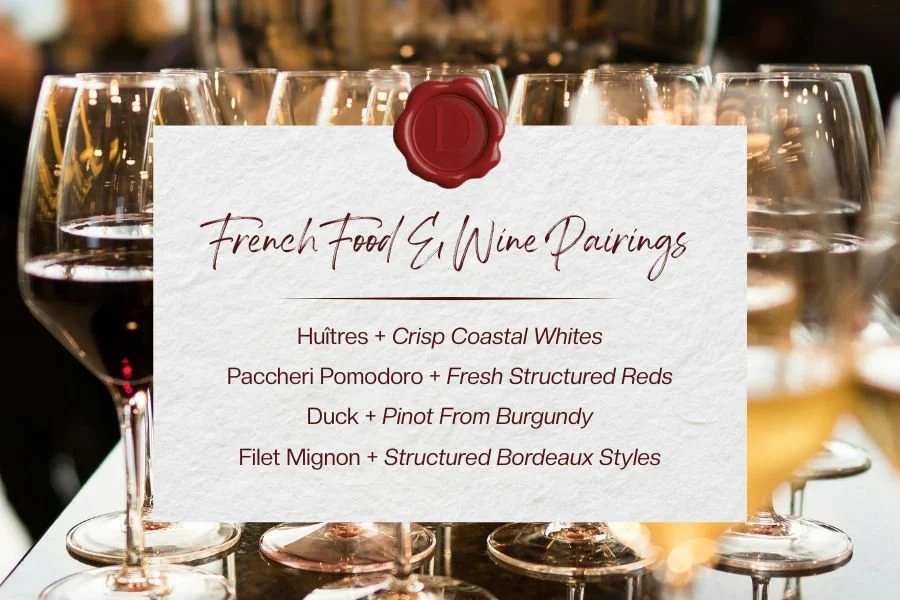
Classic French food and wine pairings carry memory. They feel familiar even on a first taste. They move with quiet confidence. These pairings continue to shape how modern tables approach balance.
The menu at Dorsia speaks this same language through French roots, Italian influence, and Quebec ingredients. The wine list follows with region-driven precision rather than trend chasing. Below are five pairings that echo that spirit with depth and intention.
Huîtres With Crisp Coastal Whites
Oysters arrive clean and briny. The garnish stays restrained. The wine needs edge and saline energy.
This is where Muscadet styles shine. So do crisp Chablis expressions. The acid lifts the mineral snap. The cold temperature sharpens every detail. Each sip clears the shell from your tongue.
Why it works:
Brine meets acid with tension
Mineral wine mirrors sea salt
This pairing defines classic french food and wine pairings at their purest.
Tunа Carpaccio With Bright Northern Whites
The tomato dashi adds gentle umami. Lime zest lifts the surface. Olive oil brings silk.
This calls for wine that holds citrus drive with clean structure. Think Loire whites with zip. Think restrained Burgundy whites with nerve.
The wine echoes the brightness without overpowering the raw delicacy of the fish. The finish stays long and cool.
Why it works:
Citrus meets citrus
Umami finds lift
Oil softens acidity
This pairing lives at the edge where freshness feels electric.
Paccheri Pomodoro With Fresh Structured Reds
Tomato, basil, black pepper. The sauce holds both sweetness and acid. The pasta carries weight.
This invites a red that stays lively. Italian influence welcomes medium-bodied reds with bright fruit and firm grip. French regions like Beaujolais with structure also slot in beautifully.
The wine refreshes between bites without fighting the tomato.
Why it works:
Acid respects acid
Fruit cushions pepper
Medium body keeps balance
This pairing shows how Italian ease blends smoothly into a French framework.
Duck With Pinot From Burgundy
Duck carries fat and elegance in the same motion. The orange and aged citrus sauce adds depth with gentle sweetness. The smoked tea note brings shadow.
Burgundy Pinot Noir answers with silk. It keeps the pairing lifted. It avoids heaviness. It lets the fat melt instead of linger.
Why it works:
Tannin meets fat with softness
Red fruit balances citrus
This is one of the most classic french food and wine pairing examples for good reason.
Filet Mignon With Structured Bordeaux Styles
The beef arrives calm and powerful. Maitaké adds earth. Aubergine lays a soft base. Mushroom XO brings savory depth.
This is where Bordeaux-bred styles step in. Structure meets structure. Tannin wraps the protein. Dark fruit carries weight without excess.
Why it works:
Protein softens tannin
Savory unlocks depth
Structure holds the pairing steady
This combination never rushes. It settles in and stays.
Canonical Pairings That Built the Tradition
These classics shape the backbone of French pairing logic:
Oysters with Muscadet. Salt and acid move in sync.
Burgundy with beef. Tannin shapes the muscle.
Loire goat cheese with Sancerre. Tart meets tang.
Provence rosé with seafood stews. Refreshment meets heat.
Champagne with crudo-style plates. Bubbles clean the palate.
Chablis with shellfish. Mineral mirrors mineral.
Pinot Noir with duck. Silk meets fat.
Sauternes with rich cheese. Sweetness meets salt.
These references guide the table without controlling it.
Cheese and Wine
Cheese and wine move together by nature. Fat meets tannin. Salt meets acid. Texture meets structure.
The Quebec cheese selection at Dorsia leans into this balance. Soft and creamy textures play against firmer aged expressions. Buckwheat honey adds warmth and floral depth.
Wine responds by either cutting through with acid or wrapping the cheese with gentle sweetness. A crisp white refreshes the palate. A soft red adds comfort. A touch of residual sugar opens new contrast.
This pairing slows the meal. It pulls guests into the middle space between savory and sweet. The place where conversation softens and time stretches.
This is where french food and wine pairings feel most personal. No rush. No noise. Just small bites and long sips.
The Pairing Dinner Experience at Dorsia
Pairing is not meant to live on paper. It lives at the table.
The Carte Blanche du Chef invites guests into an eight-course seasonal journey shaped by the kitchen and guided by wine. Each course unfolds with intention. Each glass answers a question the plate asks.
This experience suits:
Anniversaries
Client dinners
Guest-of-honor evenings
Small group celebrations
The goal is not spectacle. The goal is flow. Dishes move with the seasons. Wines shift with the mood. The pairing stays grounded in balance.
Private room inquiries follow the same philosophy. Food sets the pace. Wine carries the night forward.
The French Food and Wine Pairing Gift Box Concept
A French food and wine pairing gift feels more meaningful than a generic basket. It tells a story. It gives a moment. It invites someone into the rhythm of a table.
A French food and wine pairing gift box shaped by this spirit might include:
One French bottle chosen by style and region
A local Quebec cheese
A pairing card that explains the mood of the match
This type of french food and wine pairing gift avoids clutter. It feels considered. It carries intention without excess.
It also suits:
Client thank-you gestures
Engagement celebrations
Holiday dinners
Host gifts
The focus stays on taste, not packaging.
The Senses of the Room
Refinement at Dorsia never feels rigid. The room invites you to lower your shoulders. Warm wood. Low light. Gentle motion in the space.
Plates land with confidence. Wine arrives without ceremony. The energy slows naturally. Conversation follows the pace of the table rather than the clock.
Dorsia is where french food and wine pairings feel at ease. Where luxury becomes quiet. Where each detail finds its place without needing to announce itself.
A Table Meant to Be Remembered
French food and wine pairings hold power because they teach restraint. They show how contrast can live inside harmony. They remind the table to linger.
At Dorsia, this craft follows instinct and season rather than trend. The kitchen builds with French discipline, Italian ease, and Quebec soul. The wine answers with region-driven clarity.
This is not pairing for show. This is pairing for feeling.
Reservations move quickly for a reason. Private rooms fill with intention. Pairing dinners carry stories from one table to the next.
If you are planning a night that deserves memory, start with the glass. Let the plate follow. Let the room do the rest.