
How to Order in a French Restaurant, From Apéritif to Digestif
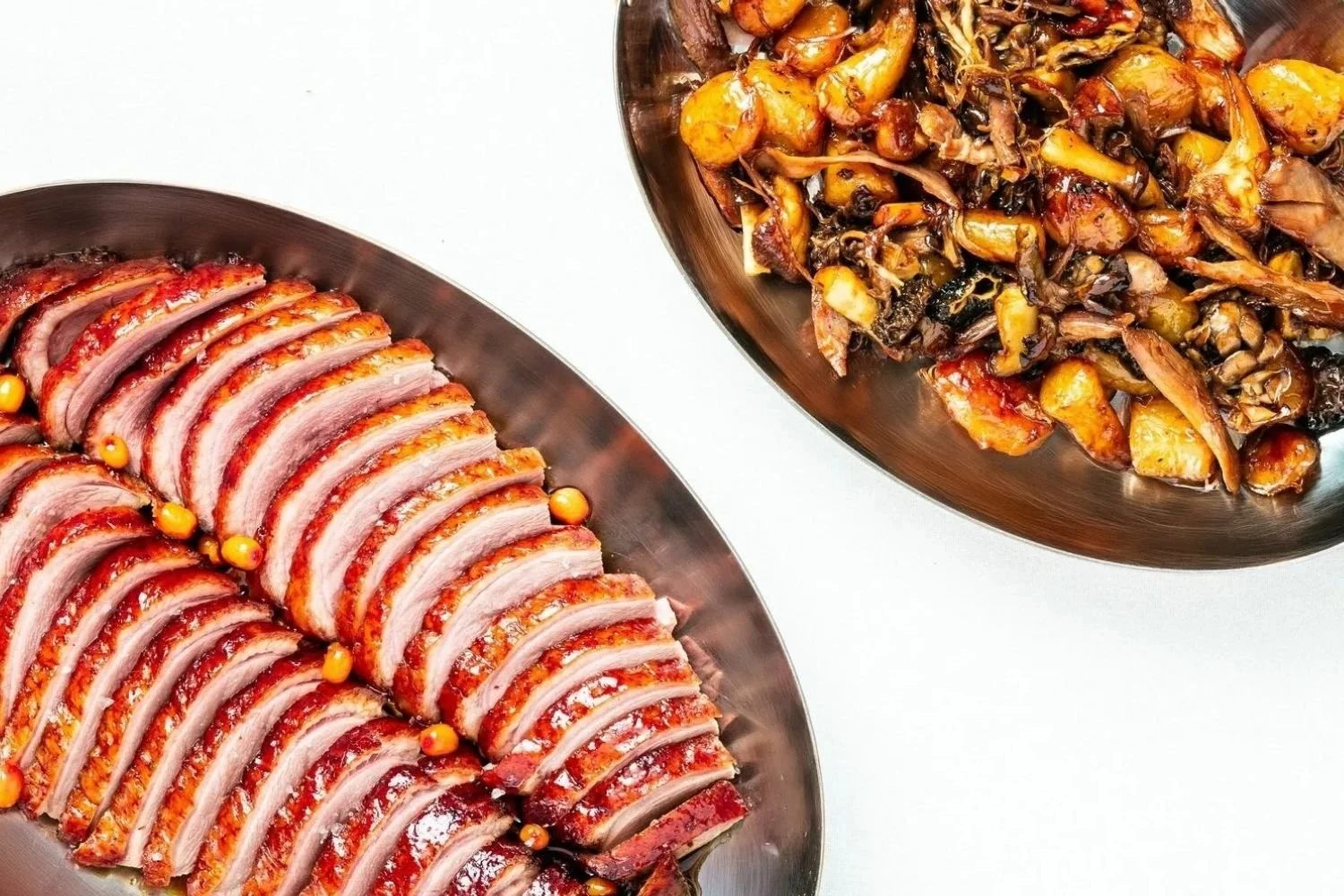
The menu arrives. The waiter disappears. And suddenly the words on the page look like a beautiful puzzle you were never given the pieces for.
French dining has that effect. Not because it's designed to exclude you. It's actually the opposite. French restaurant culture is built entirely around pleasure, around slowing down long enough to taste something properly. The feeling of being lost is just unfamiliarity dressed up in linen. And unfamiliarity is the easiest thing in the world to fix. Let’s walk you through how to order in a French restaurant.
Read this guide once (or twice), and the whole evening starts to feel like yours.
How a French Restaurant Evening Actually Unfolds
French dining follows a certain flow. A deliberate one. Once you feel it, everything clicks into place naturally, and the meal stops feeling like a performance you're underprepared for.
The experience moves in courses, each one given space to breathe before the next arrives. There's no rushing toward the end. The end is not the point.
Arrival, Greeting, and the Art of Being Seated
Walk in without rushing. The host or maître d' will greet you and guide you to your table. Wait to be seated rather than choosing a spot on your own. This isn't a formality for its own sake. It's the opening note of an evening that's been arranged with care.
A quiet "Bonsoir" is enough. Eye contact, a small nod. You don't need to perform fluency in anything. Presence is what the room asks of you.
Once seated, your server will approach in their own time. There's no expectation to order immediately. In French fine dining etiquette, the table belongs to you for the duration of the evening. The kitchen and the staff both understand this. Settle in.
The French Restaurant Service Sequence, Course by Course
Knowing the French restaurant service sequence ahead of time changes how relaxed you feel at the table. It removes the guesswork entirely.
The meal typically moves like this:
Apéritif — a pre-dinner drink to open the palate, often something light and slightly bitter
Amuse-bouche — a small, complimentary bite from the chef, not listed on the menu
Entrée — the starter course (important: in French, this means the beginning, not the main)
Plat principal — the main course, the centerpiece of the meal
Fromage — a cheese course, served before or instead of dessert
Dessert — the quiet, sweet close to everything that came before
Digestif — a post-meal drink, herbal or spirit-based, meant to settle the meal
Understanding ordering courses in a French restaurant means understanding that each of these is optional. You're not obligated to order every course. You compose the evening according to your appetite.
Reading a French Restaurant Menu Made Simple
A French menu is a document with logic inside it. Once you know the structure, how to read a French restaurant menu becomes second nature, even when the language feels unfamiliar.
The Sections of the Menu and What They Mean
Most French restaurant menus are divided clearly, even when the typography makes them look more abstract than they are.
Entrées — starters, lighter dishes meant to open the meal
Plats — the mains, the heavier, more composed plates
Fromages — the cheese selection, often curated by region or texture
Desserts — sweets, often listed separately with their own quiet ceremony
At a place like Dorsia, the menu expands this logic into something more layered. There are sections for "To Start" with oysters, caviar, tuna carpaccio, and steak tartare. Then appetizers. Then pasta, sitting beautifully between starter and main. Then mains, then sides, then cheese, then desserts. The sections build on each other with intention.
French Menu Terms That Catch People Off Guard
These are the ones worth knowing before you sit down. Consider this your french menu terms explained in plain language:
Entrée — starter, not the main course (this trips up almost every English speaker)
Plat du jour — the dish of the day, usually the kitchen's freshest offering
Maison — house-made, prepared in-kitchen rather than sourced
Fumé / Fumée — smoked
Confit — slow-cooked in its own fat, usually yielding something deeply tender
Jus — the natural cooking juices of a meat, concentrated and rich
Crudo / Carpaccio — raw proteins, thinly sliced and dressed
À point — cooked to the ideal point, most often used for steak
Garniture — the accompaniments or sides that come with a dish
What to Say When You're Ready to Order
Knowing what to say when ordering in French removes the single biggest source of anxiety at the table. The phrases below cover almost every scenario.
Asking for the Menu and Something to Drink
When your server arrives, these are the phrases that open the conversation gracefully:
"La carte, s'il vous plaît." — The menu, please.
"Avez-vous une carte des vins?" — Do you have a wine list?
"Je voudrais un apéritif, s'il vous plaît." — I'd like an aperitif, please.
"Qu'est-ce que vous recommandez?" — What do you recommend?
That last one is underused and worth leaning into. Servers at fine dining restaurants are trained to guide you. Asking for their recommendation opens a genuine conversation rather than closing you into a corner of the menu.
Ordering Your Food and Stating What You Prefer
When you're ready to order, the two most useful constructions are simple:
"Je vais prendre..." — I'll have... (literally "I'm going to take")
"Je voudrais..." — I would like...
Both are polite. Both are clear. Neither requires you to speak in full grammatical sentences around them.
If you have a preference or a restriction, these help:
"Sans..." — Without... (e.g., "Sans gluten" for without gluten)
"Est-ce que c'est possible d'avoir..." — Is it possible to have...
"Je suis allergique à..." — I'm allergic to...
How to Order Steak in French and Specify Doneness
Knowing how to order steak in French is one of those specific skills that pays off immediately. The doneness terminology differs from English, and getting it wrong means getting something unexpected on the plate.
Bleu — very rare, barely seared on the outside, almost raw throughout
Saignant — rare, with a cool red center
À point — medium, the sweet spot that most French chefs would recommend
Bien cuit — well done, fully cooked through
If you're ordering the Côte de Boeuf or the Wagyu Striploin at Dorsia, your server will likely ask. Answer with confidence. "À point, s'il vous plaît" is the classic answer, and the kitchen will know exactly what you mean.
Asking About Wine and Pairing Suggestions
Wine pairing, how to order it well, starts with one honest question. Ask your server or sommelier what they'd suggest alongside your dish. This is entirely expected and genuinely welcomed.
Useful phrases:
"Quel vin recommandez-vous avec ce plat?" — Which wine do you recommend with this dish?
"Je préfère quelque chose de plus léger." — I'd prefer something lighter.
"Un verre ou une bouteille?" — A glass or a bottle? (They'll ask you this, good to know it's coming.)
The Chef's Carte Blanche menu at Dorsia includes optional wine pairings: five wines for $95 or seven wines for $125. If you want the full experience without making a single wine decision yourself, this is the most elegant way to surrender to the evening.
How to Order Dessert and a Digestif Without Overthinking It
The close of a French meal deserves the same attention as the opening. Knowing how to order dessert and digestif means the evening ends on your terms, not in a rush toward the exit.
When the dessert menu arrives, take your time. At Dorsia, the options range from a 64% single origin Ecuadorian chocolate dessert to an Apple Caramel Crunch with dulce de leche and tonka, to a Tiramisu finished with limoncello. There's also a cheese course, a selection of three local Quebec cheeses served with buckwheat honey, for those who prefer to close on something savory and contemplative.
After dessert, the digestif is offered. Common options include Cognac, Armagnac, Calvados, or herbal liqueurs like Chartreuse or Bénédictine. A simple "Qu'est-ce que vous avez comme digestifs?" (What do you have for digestifs?) opens the door. Your server will walk you through it.
Prix Fixe vs À La Carte, and How to Choose
Understanding prix fixe vs à la carte is one of the more practical decisions you'll make before the meal begins.
À la carte means you order each course individually, at individual prices. You build the meal yourself, choosing only what appeals to you.
Prix fixe (or a set menu) means a predetermined sequence of courses at a single set price. It removes decision fatigue and often represents the kitchen at its most curated.
The à la carte menu gives you full creative control across starters, pasta, mains, and sides. The Chef's Carte Blanche menu is usually an 8-course seasonal journey composed entirely. It's the prix fixe equivalent of handing the wheel to someone who knows every turn of the road. For a first visit, or for a special occasion, it's worth considering seriously.
The Etiquette That Actually Matters
French fine dining etiquette is less about rigid rules and more about a shared agreement between you and the room. These are the things that actually register:
Phones are best kept off the table. If you need to photograph the food, do it quickly and discreetly.
Pace yourself. Finishing a course in four minutes signals discomfort. Let the food earn your attention.
Bread, if offered, is placed on the table, not on a separate bread plate at some restaurants. Break it by hand, never cut it.
The napkin goes on your lap the moment you sit. If you leave the table briefly, fold it loosely and place it on your chair, not on the table.
Summoning your server is done with a quiet look in their direction, or a subtle raise of the hand. Never a snap or a shout.
None of these are secrets. They're just a quieter version of the consideration you'd show anywhere you genuinely wanted to be.
What to Wear to a French Restaurant
The dress code at a French restaurant is one of those things that's easier to understand than people expect. The standard is refined and considered. Not theatrical, not overly formal, simply thoughtful.
At Dorsia specifically, the dress code is described as refined and sophisticated. Overly casual clothing, including sportswear, shorts, sweatpants, and sandals, is not permitted. This isn't about exclusivity for its own sake. It's about the collective atmosphere of a room where everyone has come to be present for something.
Think of it this way: the kitchen spent hours on your plate. The least generous thing you could do is arrive looking like the evening wasn't worth the effort.
A Note on Tipping in Montreal
For anyone navigating tipping in Montreal restaurants for the first time: tipping is standard and expected in Quebec. The customary range sits between 15% and 20% of the pre-tax total, with 18% being a common baseline for good service. At a fine dining level, 20% is a natural acknowledgment of the attention and craft that goes into the experience.
The Table Is Set
Now you know how to order in a French restaurant like Dorsia without rehearsing lines in your head or second-guessing the menu. The vocabulary is manageable. The etiquette is human. The sequence, once you've lived it once, becomes something you actually look forward to.
Dorsia is at 396 Notre-Dame Street West in Old Montreal, settled inside a historic building with a kitchen driven by Quebec product and a dining room that asks nothing of you except your genuine presence. Reservations are available through their website. The Carte Blanche menu books quickly on weekends.
Come dressed for the occasion. Come ready to slow down. The rest takes care of itself.